Archives

Tips for black Relaxed & Natural hair care

Hair - Fontana Make Up Expert - June 22, 2014

Black hair can’t grow! I hear that statement regularly and it is absolutely false. People assume that I am must be “mixed” because I have long hair natural hair. Well, women of ALL ethnic backgrounds have the potential to grow long healthy hair. I have taken the natural hair care tips that I learned over the years and grouped them into categories I call the 3M’s of Hair Care. Whether relaxed or natural, these tips will help you grow long hair.

Often I read tips for black and natural hair care that are very complicated. The 3 M’s below will help you have healthy long hair while keeping it simple.

Minimize Breakage

All hair grows!!!! I repeat ALL hair grows. Every individual’s growth rate varies but unless you have a medical condition that prevents growth, you hair is growing. While there are some slight variations in growth rate based on ethnic background, this difference is minor and is not a major part of the puzzle on how to grow long hair. The reason many black women do not have long healthy hair is due to BREAKAGE.

The average hair growth rate is about .5 inch a month (some people of course have a faster rate and others slower). If your hair is breaking almost as much each month than it will appear that your hair is not growing. Curl pattern and strand thickness often makes black hair more prone to breakage. Minimizing breakage requires GENTLE daily natural hair care. If you hair is breaking you may need to make changes in the methods you use for: shampooing, conditioning, moisturizing, combing & brushing, drying and styling.

Maximize Growth

As mentioned above everyone has a rate at which their hair grows. Your growth rate is mostly a product of your genetics. However there are things that you can do to improve your natural hair growth.

Healthy hair comes from the inside out. Diet and exercise are key to growing healthy hair. There are also vitamins and supplements that can help improve your natural hair growth. If you are dealing with hair loss or extremely slow growth please consult your physician as this may indicate a medical condition.

Proper scalp care is the other key to getting maximum hair growth. A clean and healthy scalp will help you get the best natural hair growth rate. A scalp condition can slow your hair growth.

Maintain Progress

You may know someone who is able to handle their hair harshly- coloring, cutting frequently, rough styling etc… and their hair just seems to flourish no matter what. However this is not the case for many women, and definitely not for most black women in particular. While our hair may look strong it is truly quite fragile.

Relaxed and natural hair care requires ongoing maintenance. Once you begin to get your hair healthy and reach the length of your goals you will have to do things to maintain your progress. It has to become an ongoing cycle and this is how your hair will thrive. Hair maintenance includes creating and revising a hair regimen, hair trimming, natural hair styling, and night time routine/care.

Jamaic beauty tips
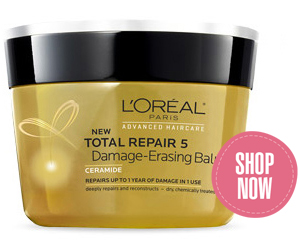
Jamaica L'Oreal Beauty Products

Total Repair 5 Damage Erasing Balm is a rinse-out reconstructing balm that repairs up to one year of damage in 1 use*. Both powerful and luxurious, the balm instantly repairs the 5 signs of damage – split ends, weakness, roughness, dullness, and dehydration. * Reverses damage to hair’s smoothness with daily use, when using the system of shampoo & balm.

0
Continue Reading

Quick Black Hair Care Tips

Hair - Fontana Make Up Expert - June 20, 2014

A healthier lifestyle will result in healthier hair.

Massaging your scalp on a regular basis will stimulate oil production, which will help reduce the dryness of your hair.

Daily shampooing is not recommended, ethnic hair is dryer than other types of hair, shampooing strips away the oils from your hair so try shampooing once every 3 to 7 days instead.

If you engage in daily activities that causes you to sweat, it is recommended that you rinse your hair out with water and only use shampoo on occasion. If you feel the need to use a mild shampoo, go ahead and do so.

Use a mild moisturizing shampoo with a low PH level when washing your hair.

Don’t use a 2 in 1 shampoo and conditioner, use a separate shampoo and conditioner, 2 in 1’s aren’t suited as well for dry hair.

When washing your hair rub only in one direction to avoid tangling.

Shower with warm water; hot water can dry and/or irritate the scalp.

Oil your scalp after shampooing. With your hair still moist, massage the oil into your scalp and brush out to the ends of your hair.

Use a conditioner when you shower, it’ll moisturize your hair, give it extra protection, add shine, reduce static, and makes it easier to untangle.

Use a leave in conditioner, it’ll hydrate and protect your hair. A leave in conditioner on your hair is the equivalent of moisturizer on your face.

Don’t rub your hair dry with a towel, instead blot the water out of your hair. Rubbing will cause your hair to tangle and you’ll risk breakage.

Limit your use of “hot” items on your hair such as blow dryers.

Use a wide toothed comb or pick to comb your hair. It makes it easier to comb if your hair is slightly moist so the comb can slide easier across your hair. Using a leave in conditioner will also make your hair easier to comb. If your hair is very wet, wait until it dries more; hair is most fragile when it is wet.

If you encounter a tough knot or tangle, use your fingers to loosen it and then continue combing.

Comb your hair to remove any tangles before brushing it. Using a brush to detangle your hair will stretch your hair and may cause your hair to break off.

Use a soft boar hairbrush on your hair daily; this will distribute the oil at the root of your hair and scalp to the rest of your hair. Dampen the brush slightly before brushing.

Get a hot oil treatment once a month which will remoisturize your scalp and hair.

Hair can get caught on cotton pillow cases and break when you are sleeping, especially if you toss and turn a lot when you sleep. Using a satin or silk pillowcase so that your hair will slide across the pillowcase without getting caught.

An alternative to the silk pillowcase is to wear a silk or satin scarf over your hair before your sleep to prevent breakage.

Avoid hair products that contain alcohol which drys out hair.

0
Continue Reading

Step-by-Step Guide to a Perfect Mani-Pedi

Manicures & Pedicures - Fontana Make Up Expert - June 19, 2014

The following is a great system for creating the perfect manicure or pedicure at home:

  1. First, remove any previously applied nail polish. It doesn’t matter whether you use a nail polish remover that contains acetone or not. It also doesn’t matter whether the nail polish remover claims to contain moisturizing ingredients. If a nail-polish remover can remove nail polish it is going to be rough on your nails and cuticles, but that is the price of nicely painted nails. Use as little nail polish remover as necessary to remove the polish. Never soak the nail in it! Nail-polish remover is extremely drying on the entire nail area, especially the cuticle. Keeping contact with nail polish remover to a minimum is crucial for the well-being of the nail and cuticle.
  2. Before soaking your fingernails in water, either cut them or file them into shape. When fingernails are wet, they are more prone to damage then when they are dry. Gently file the nails into the shape you want, using the least-abrasive emery board you can find (avoid metal or extremely coarse files). Avoid shaping your nails into long talons or severe shapes (too square or pointy). Fingernails can be given a slightly rounded edge to protect the nail growth or a square appearance as long as it isn’t too squared off. Quality nail files can be found in most major drugstores and don’t have to cost a fortune.
  3. Soaking the cuticle is necessary if you plan to remove a bit of excess cuticle but over-soaking the nails can damage them, so immerse your nails in plain warm water for no more than three minutes. Avoid soapy or detergent-filled water, which only dries the skin and damages the cuticle. For your feet, because of the thickness of the toenails and their cuticles, the toenails can be immersed in water for a longer period of time. A warm soak feels wonderful and also helps soften the nail so it can be cut easier with a nail clipper.
  4. Trim toenails carefully using nail clippers. Nails are definitely easier to trim after bathing or soaking, but if you have soft nails cut them before you soak them to prevent tearing or damage to the nail. Toenails should be trimmed straight across, slightly above the quick. Avoid cutting them too short because doing so increases the chance of developing ingrown toenails.
  5. Moisturize cuticles with a very emollient, thick moisturizer. Almost any moisturizer or oil for dry skin will do. It is not necessary to purchase special cuticle creams: They contain absolutely nothing special for the nail or cuticle.
  6. Now is a great time for using a sugar scrub to massage your feet, legs, hands, and arms. Rinse your hands first and then take time to use a metal foot file or flat pumice stone to buff away calluses on the bottoms of your feet. Then rinse the scrub off your feet and legs.
  7. As an option, you can apply a specialized cuticle remover that actually dissolves excess cuticle skin. One of the more effective ones is Cuticle Eliminator.  Its high pH level is what makes it work so well, but that also means you don’t want to leave it on your skin for too long. Apply the Cuticle Eliminator lotion to the cuticle area and then proceed to step 8.
  8. Next, very, very gently, push the cuticle back away from the nail but avoid pushing it too far which can damage nail growth or fray the cuticles. Be careful not to pull, lift, tear, rip, force, or cut into the cuticle in any way. Trim only the free edge of your cuticles, avoiding the cuticle area next to the nail bed. Cutting too deep can eventually damage the nail.
  9. Before you polish your nails, it is essential to remove any remaining oil or moisturizer from them. Moisturizing ingredients of any kind left on the nail prevent polish from adhering to the nail. Use nail polish remover or plain alcohol just over the nail’s surface to take off any moisturizer. Avoid getting nail polish remover on the cuticle; that’s the area you want to keep the moisturizer on, but be thorough about the nail itself.
  10. Polish your nails in layers, allowing them to dry between coats. A minimum of four coats (base coat, two coats of color, and a top coat) is standard. If you have weak or brittle nails, place one or two coats of ridge-filling nail polish on the nail as the base coat; this is the best way to shore up the nail. Two coats of a colored nail polish are next, followed by a top coat to add shine and luster.
  11. Allow plenty of time for the polish to dry. Quick-dry polishes and some quick-dry top coats of polish often contain alcohol, which can cause the polish to peel and chip more easily, so you want to avoid those. Using a quick-dry oil or spray after you’re done polishing is a great way to ward off smudges, but these won’t prevent nicks or dents in the polish, so be careful.
  12. Do not dry your nails with a blow dryer or any other heat source. Heat causes the polish to expand and lift away from the nail.
  13. Once the polish is dry, massage a rich emollient moisturizer or balm onto the cuticle area. This will help encourage healthy nail growth and protect the cuticle.
  14. Touching up polish every other day with a layer of top coat can help make a manicure last longer. Carry a bottle of top coat in your purse, and when you have a moment or break in your day, do a quick once-over. A single layer dries quickly and makes all the difference in keeping up appearances.
0
Continue Reading